Bella Jahrmarkt
My name is Bella Jahrmarkt, and I recently graduated from Scripps College in Claremont, California, USA, with a degree in Environmental Science and two minors in Spanish and Political Science. My interest in the environment, conservation, outdoor activities, and community life led me to a new experience in Indonesia through an internship with the Arsari Foundation and Wadah Foundation.
Traces of Knowledge in Sangiran
I began my time at Rumah Yayasan that is in Bendungan Hilir, Central Jakarta, where friendly staff welcomed me and introduced me to the programs I would work on throughout my six weeks in Indonesia. From there, I left the fast-paced environment of Jakarta for Sangiran, where I joined the Indonesian Integrated Archaeological Research (PATI) 2026 program in Manyarejo Village, Sragen.
My first days with the PATI team gave me an up-close look at archaeology and conservation in the field. At the Manyarejo Open Air Museum, I helped clean the walls of excavation boxes and assisted with fossil conservation, including work on a Hexaprotodon fossil at Mpu Balung Mbah Setu’s house alongside conservators from the Sangiran Museum and Cultural Heritage (MCB) and the PATI team. I quickly realized that uncovering a new artifact is only the beginning. Preserving it carefully is what allows it to continue contributing to research and public understanding.
My Environmental Science background also gave me a different way of looking at the site. I drew on my geology and environmental systems coursework when considering the surrounding landscape and discussing ways to protect the area from landslides and other weather- and climate-related degradation. At the same time, I was constantly learning from the professors, students, and community members whose expertise was completely different from mine.
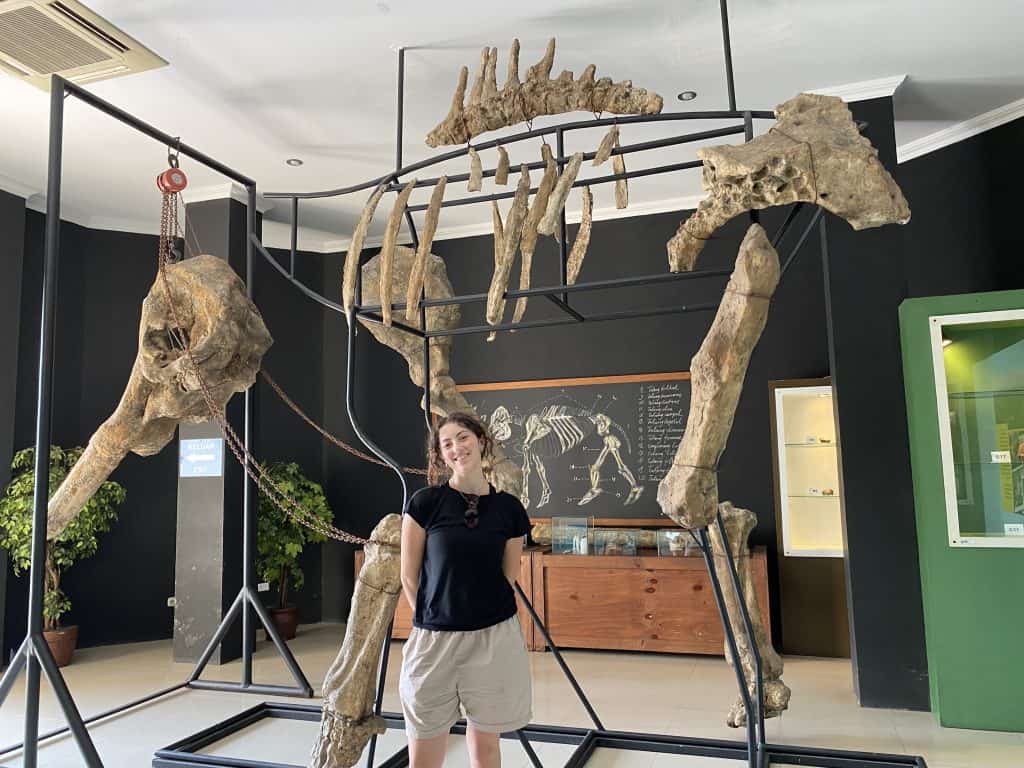
One of my favorite parts of my stay in Sangiran was seeing just how much local knowledge is connected to its archaeological history. I visited the Manyarejo, Ngebung, Krikilan, Dayu, and Bukuran museums, and met Mpu Balung Mbah Sinyur, who showed me fossils he had discovered, even gifting me a few, and took me to the site where he had found a Stegodon skull. Although we could not speak directly because of the language barrier, I could feel his passion for archaeology and his community.
Working alongside Indonesian students, researchers, conservators, academics, and community members made Sangiran feel much bigger than an archaeological project. I could share my experiences as an environmental science student in the United States, but I was just as often the one learning. My geology background helped me understand parts of the landscape, while the PATI team introduced me to an entirely new field through hands-on experience. Sangiran reinforced something I have come to value in environmental work: conservation works best when it includes the people who know a place best.
From Soil, an Idea Takes Root
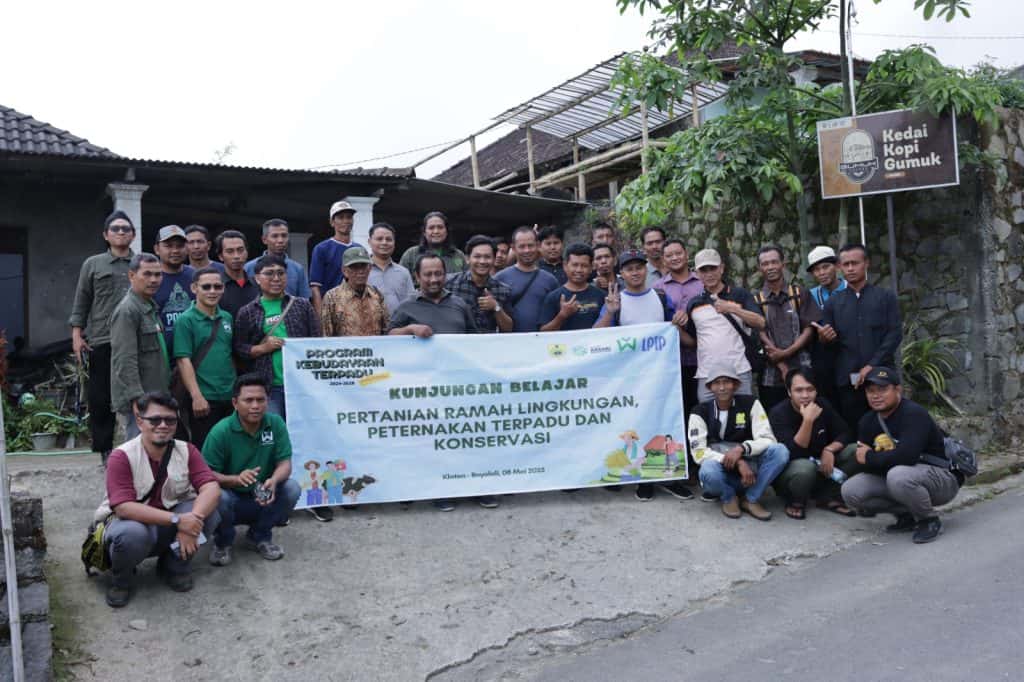
Before leaving Sangiran, I spent time with the Sangiran Integrated Cultural Programme (PKTS), where I got to see a more familiar side of environmental work. At a Conservation Village Nursery, I looked at dry, landslide-prone slopes with the LPTP team and discussed how plant selection, soil characteristics, and water movement could help reduce erosion and stabilize the land. We talked about drainage systems and plants that could retain water and hold soil in place.
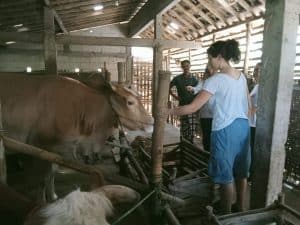
I also visited a Livestock Field School participant who had a biodigester that turns cow manure into biogas for several households. It was a simple but interesting example of how an existing resource can be reused to meet another community need. At the Horticultural Village Nursery in Manyarejo, I helped prepare planting media using dried animal manure, local soil, and rice husk charcoal. I liked being able to take what I have learned about soils in a classroom and lab and apply it in a small community setting.
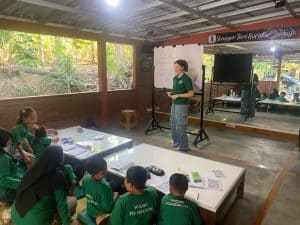
In Bantul, I also visited Sanggar Kartika Budaya, where I joined a traditional dance class with local students and helped with an English lesson for younger children. After spending so much time focused on archaeology and environmental work, it was fun to learn something completely different. I was very much a participant rather than an expert, and that became a recurring theme throughout my time in Indonesia.
Conversations that Open New Perspectives
After two weeks in Sangiran and a few days in Yogyakarta, I travelled to Ambon, where my work shifted toward education and community engagement. I spent the week moving between schools, universities, and community programs, and I realized that I was going to learn just as much from these conversations as I was going to share.
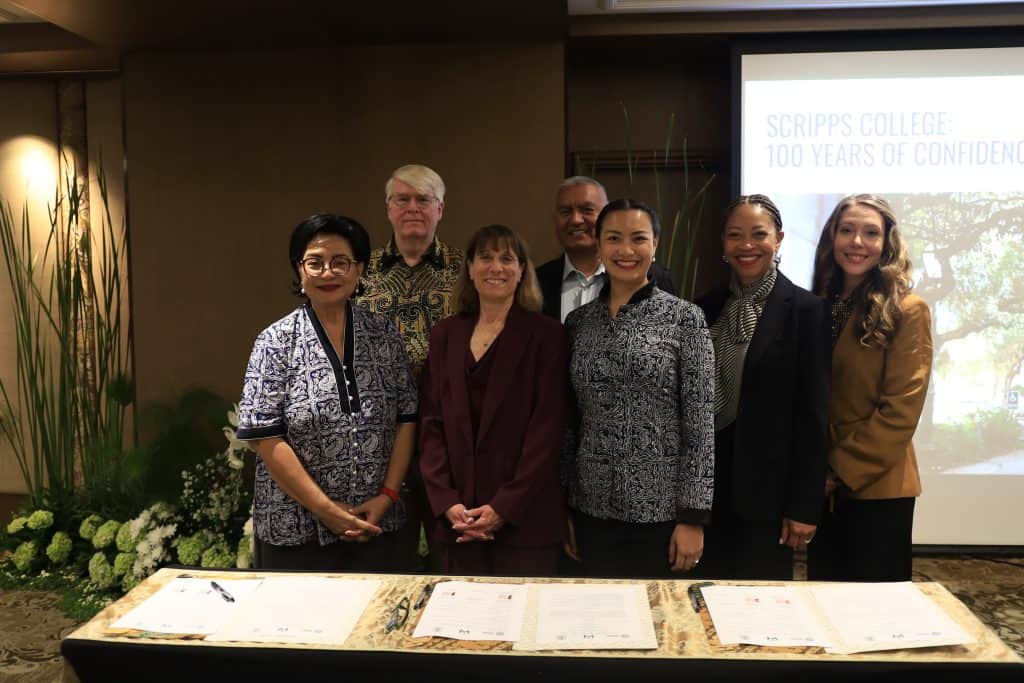
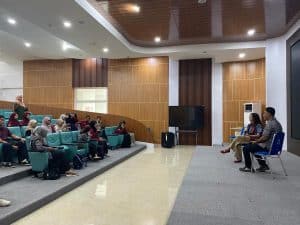
At MAN Ambon and UIN A.M. Sangadji Ambon, I talked with students about studying at Scripps College, my campus’ environmental justice collective I co-founded, and student life in the United States. Although they have different experiences in school than me, talking with Indonesian university students felt familiar, as we related over classes and trying to figure out what we wanted to do with our education.
My experience with the Wadah Rinjani Community was a little different. The women welcomed us by teaching us traditional dances before we had a sharing session about their experiences as women and caretakers in their communities. I then helped teach English, focusing on phrases, colours, numbers, and prices that could be useful in running their small fireworks shops and when interacting with foreign visitors. I appreciated that the lesson was connected to something they had identified as useful themselves rather than simply being a lesson I had arrived with.
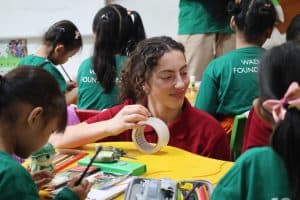
I also worked with young people through Pemuda Pelajar Titian Harapan and assisted teachers at PAUD Titian Harapan. Working with preschool children was very different from talking to university students. I helped teach basic English words for emotions and had to find creative ways to keep everyone engaged. By the end of the week, I had gotten much better at adjusting how I communicated depending on who I was working with.
Ambon reminded me that volunteering is not just about what I can offer. Sometimes the most important thing I can do is listen, participate, and figure out what is actually useful to the people I am working with.
Among Forests, Wildlife, and Soil
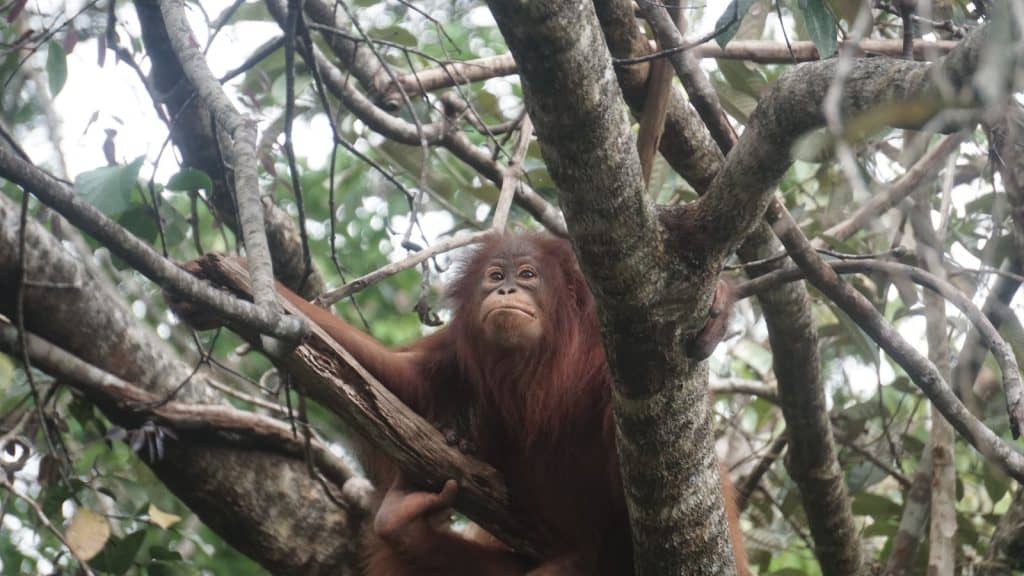
Working at PSO Arsari was probably the most familiar part of my internship, even though I had never worked with orangutans before. Seeing them for the first time was surreal. I shadowed the veterinarians as they prepared food and enrichment, observed the animals, and gradually became more comfortable around them. Eventually, I was able to participate in training, give treats, and assist with administering a nebulizer treatment to Boni.
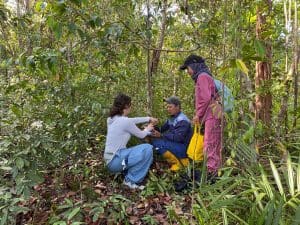
I also visited the island that the team is preparing as an orangutan sanctuary, where I helped place camera traps to monitor wildlife. Trekking through the muddy mangroves and walking barefoot through the jungle was a completely new experience for me. I loved being outside and getting to see the landscape the team is working to protect.
The part of PSO that connected most directly to my own experience was a small soil project I proposed after the team mentioned they were having difficulty cultivating a garden and orchard. I collected soil samples and used the lab to test texture, water-holding capacity, and pH. I then wrote a guide with recommendations for planting, composting, and maintaining healthier soil. I enjoyed designing a project myself and finding a way to use a skill I have developed through my environmental science research to help with an immediate need.
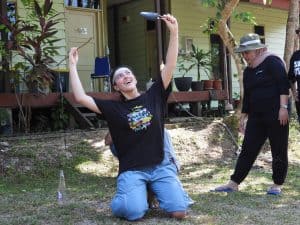
My time in Kalimantan also brought back a part of environmental science that I had started to miss. After several years of mostly abiotic soil and environmental research, working closely with animals reminded me how much I enjoy wildlife and fieldwork. I also got to spend time with the PSO team during Indonesia’s Independence Day celebrations, where we played games and competed for prizes. It was a fun way to get to know the people I had been working with outside of the field.
I also volunteered at the local YKI school, working with students of all ages. I shadowed English lessons in the classrooms before leading activities for the students. I also joined the middle school Taekwondo club, utilizing my black belt to lead training exercises and do some demonstrations. I met with the middle and high school student councils and participated in discussions with their English clubs. I also met many of the teachers and shared my knowledge of the US education system and how it compares with the Indonesian system.
Returning to Jakarta, Seeing with a New Perspective
My final week brought me back to Jakarta, where I worked with several Wadah community programs. At PAUD Kuntum Harapan and PAUD Al Hidayah, I assisted teachers with English activities for young children, introducing topics such as colours, rooms in a house, and family. I also spent time talking with the teachers and school leaders about their daily work, the challenges they face, and how early childhood education in Indonesia compares with what I have seen in the United States.
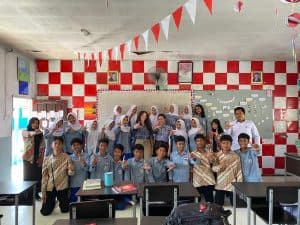
Later in the week, I visited TPQ Al Hidayah and LKP Al Hidayah in Penjaringan. I helped hand out prizes from the Independence Day competition, met with students, and worked with junior and senior high school students to create short student profiles. By this point, I had worked with children, teenagers, university students, teachers, researchers, conservationists, and community members across Indonesia. Each group required something slightly different from me, and I became much more comfortable figuring that out as I went.
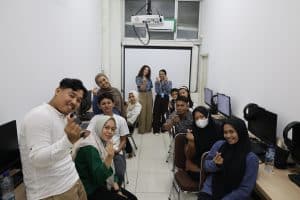
Looking back at my six weeks in Indonesia, I am struck by how many different directions the experience took me. Some of my favourite moments were the ones I could not have planned for, whether that was being handed fossils by a local archaeologist, learning traditional dances, trekking through a mangrove forest, or playing Independence Day games with my coworkers.
More than anything, I enjoyed how this experience constantly had me learning something new. My experiences in Indonesia reinforced my belief that environmental work does not exist separately from people, culture, education, or local knowledge. It is much more interconnected than that, and I am leaving with a much better understanding of the kind of work I want to continue doing.